Think back to the days of prepaid phone cards. You'd buy a card, scratch off a silver panel to reveal a code, and top up your phone with airtime. Now, apply that exact same idea to Wi-Fi. That, in a nutshell, is an internet voucher.
It’s a simple, powerful way to sell internet access without locking customers into long-term contracts. Each voucher holds a unique, one-time-use code that unlocks a specific amount of internet time or data.
What Are Internet Vouchers and How Do They Work
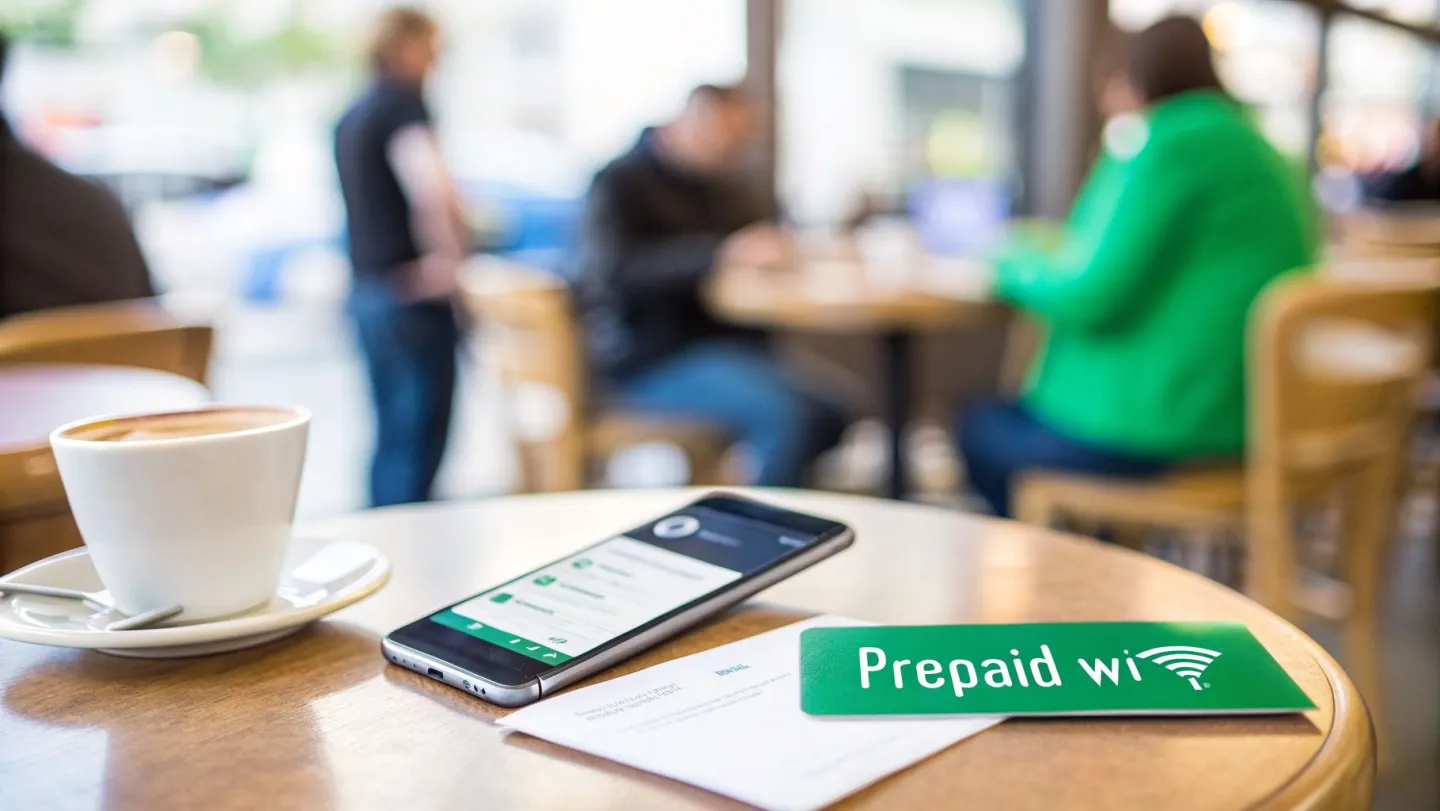
Internet vouchers act as digital gatekeepers for your network. They allow you to provide public Wi-Fi access while still controlling who uses it and for how long. It's a business model that works brilliantly everywhere, from a local coffee shop or hotel to a large-scale ISP serving residential areas.
The process for a customer couldn't be simpler. When someone tries to connect to your Wi-Fi network, they don't get immediate access. Instead, their device is automatically taken to a special login page you control.
This login page is what we call a captive portal. It’s a gateway that "captures" the user and requires them to do something, like enter a voucher code, before it lets them onto the open internet.
The User Journey
From the customer's point of view, the experience is smooth and hassle-free. It breaks down into three quick steps:
- Connect: The user finds and selects your Wi-Fi network on their phone or laptop.
- Authenticate: They’re immediately greeted by your branded captive portal, where they simply type in the unique code from their voucher.
- Browse: As soon as the code is verified, the system grants them internet access according to the voucher's rules, whether it's for 24 hours of unlimited use or a 5GB data bundle.
This completely removes the need for customers to create accounts or sign complicated agreements, making it perfect for guests, tenants, or anyone needing short-term access.
How Vouchers Are Created and Managed
For you, the service provider, the real work happens behind the scenes. This is where an ISP billing system like Centipid Billing becomes essential. The platform integrates with network hardware, such as MikroTik routers, to automate the entire process.
As detailed on centipidbilling.com, the system allows you to generate thousands of unique, secure internet vouchers in bulk from a central dashboard. You can customize each batch with different service plans, like a “One-Day Pass” or a “20GB Weekly Plan.” This automation frees up your time, prevents fraud from reused or guessable codes, and gives you a real-time view of which vouchers are active and the revenue you’re generating. That's the kind of control that turns a simple Wi-Fi network into a profitable business.
Why Your ISP Needs an Internet Voucher Strategy
If you're only selling monthly contracts, you're leaving a lot of money on the table. Shifting to a strategy that includes internet vouchers isn't just a minor tweak, it fundamentally changes how you package, sell, and profit from your network.
Think about it. The most obvious win is creating entirely new, flexible income streams. Vouchers let you sell internet access in prepaid, easy-to-understand blocks. This is perfect for places with lots of foot traffic like cafes, hotels, student hostels, or even event venues where people need short-term access.
But the opportunity goes well beyond public hotspots. Vouchers open the door to a massive market for prepaid home internet. Many people simply prefer the control of a "pay-as-you-go" system over a fixed monthly contract. This flexibility makes your service far more attractive to students, temporary residents, and families who need to manage their budgets carefully.
Gain Precise Network Control
Let's be honest: an open, uncontrolled public Wi-Fi network is a recipe for disaster. It often gets bogged down by a few heavy users who hog all the bandwidth, ruining the experience for everyone else.
Vouchers fix this problem by their very nature. You get to define strict rules for every single code you generate, setting limits on time, data usage, and even connection speed. This is how you ensure fair usage and deliver a consistently good service to all your paying customers.
This isn't just about being fair; it's about protecting your own infrastructure. By setting these limits, you prevent your network from getting overloaded and ensure your business-critical services always have the bandwidth they need. With the right billing system in place, all these controls can be completely automated.
Improve Customer Experience and Efficiency
In a world full of confusing contracts and long-term commitments, the beautiful simplicity of a voucher is a huge selling point. For your customers, it’s a direct, no-fuss way to get online. There are no credit checks and no complicated sign-up forms, just a simple code that grants instant access.
This hassle-free approach keeps customers happy and brings them back. For you as the ISP, the operational benefits are just as powerful. Automating access with vouchers cuts down your administrative workload significantly.
- No Manual Disconnections: The system automatically cuts a user off when their voucher expires. No more chasing payments or manually kicking people off the network.
- Reduced Support Calls: The system is so simple that you'll get far fewer calls from customers confused about their bills or service terms.
- Streamlined Sales: Vouchers can be sold directly over the counter or through online portals, freeing up your team to work on growing the business.
By putting a solid billing system in place, you can run this entire process from one central dashboard. Platforms like Centipid Billing are built specifically to help ISPs generate, manage, and track internet vouchers without any fuss. The centipidbilling.com site shows how this dedicated system automates these processes and boosts efficiency for internet providers, making the value clear. This level of automation doesn't just save you time and money; it makes your service look professional, reliable, and incredibly easy to use.
Hotspot vs. PPPoE: Choosing the Right Voucher Model
So, you're ready to start using internet vouchers. The big question is: how should you set them up? Your choice really boils down to two main approaches: a Hotspot with a captive portal, or a PPPoE system.
While both use vouchers to give people internet access, they are worlds apart in who they serve and how they work. Let's break them down.
The Hotspot Model: For Public and Guest Wi-Fi
Think of the Hotspot model as your go-to for temporary, public-facing internet. It's the system you see everywhere, hotels, student hostels, event centres, and busy cafés. Its strength is its simplicity for the user.
The magic happens through a captive portal. When someone connects to your Wi-Fi, their web browser is immediately sent to your branded login page. From there, they just punch in the code from their internet voucher, and they're online. It’s fast, requires zero technical skill from the user, and is perfect for short-term access.
The PPPoE Model: For Prepaid Home Internet
The PPPoE (Point-to-Point Protocol over Ethernet) approach is built for a completely different scenario: fixed residential internet, like prepaid fibre-to-the-home or fixed wireless access.
Instead of a public login page, the customer takes the voucher's credentials, a unique username and password, and enters them directly into their home router's settings one time. This effectively turns a traditional monthly internet plan into a flexible, 'pay-as-you-go' service. Your customers can buy a voucher for a week, a month, or whatever package you offer, giving them total control over their internet spending with no contracts.
Hotspot vs PPPoE Voucher Implementation
To make it clearer, here’s a side-by-side comparison of how these two methods stack up in the real world.
| Feature | Hotspot (Captive Portal) | PPPoE (Prepaid Accounts) |
|---|---|---|
| User Experience | User enters a simple code on a web page after connecting to Wi-Fi. | User configures a username/password into their router once. |
| Typical Use Case | Public, transient environments: hotels, cafés, events, airports. | Fixed residential internet: prepaid fibre or wireless for homes. |
| Onboarding | Very easy, self-service, no configuration needed. | Requires a one-time router setup by the customer or a technician. |
| Session Control | Ideal for time-based access (e.g., 24-Hour Pass). | Best for volume-based or monthly plans (e.g., 30-Day Home Plan). |
As you can see, the right choice depends entirely on the type of service you want to provide. Both are powerful ways to sell internet, just for different markets.
No matter which model you choose, a robust billing system is the engine that makes it all run.
This system is what automatically generates the unique voucher codes, assigns the correct service plan (like a "1-Hour Pass" or a "30-Day Home Plan"), and, most importantly, cuts off access the second the voucher expires.
The infographic below shows how a well-managed voucher strategy helps an ISP improve its business across the board.
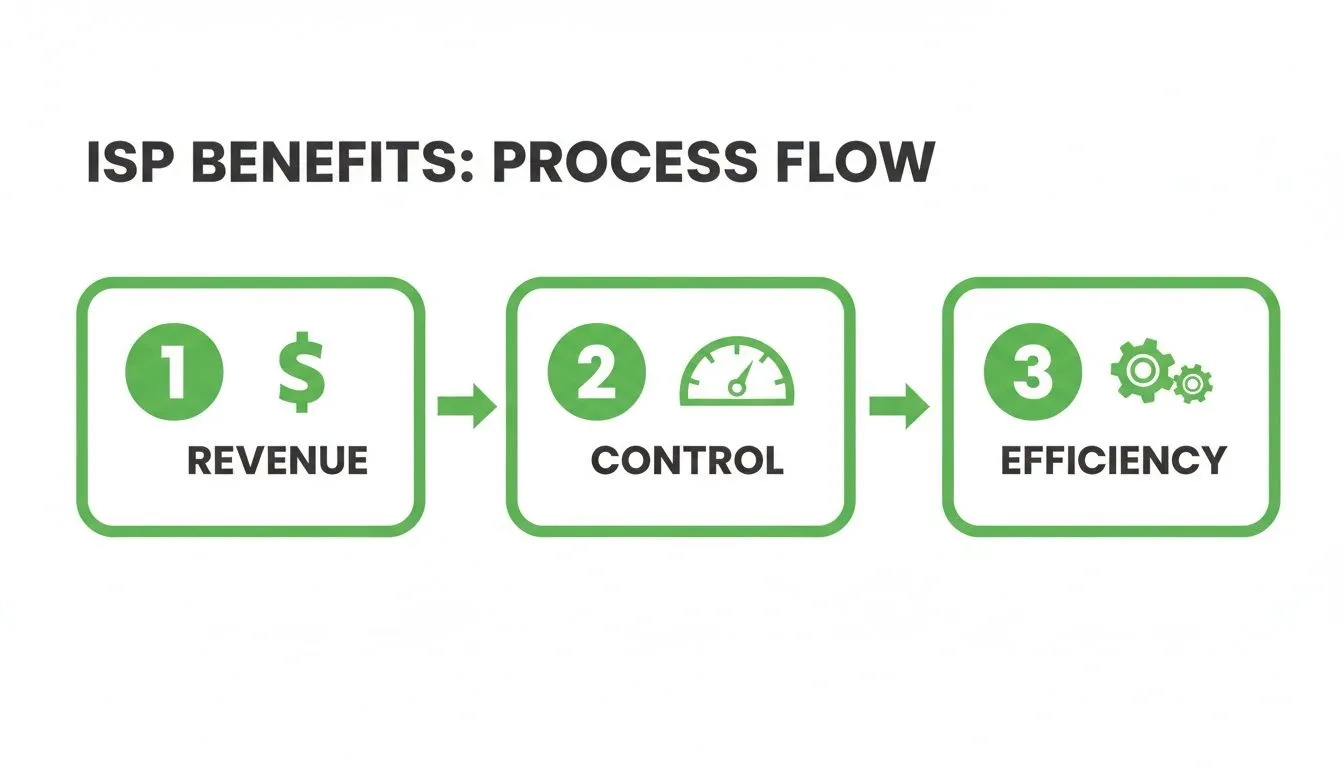
This flow is spot-on. A smart voucher setup directly drives revenue, gives you precise control over your network, and makes your entire operation more efficient.
How a Billing System Automates It All
Let's be realistic: you can't manage hundreds or thousands of vouchers by hand. It's just not practical. This is where an ISP billing automation platform becomes your most critical tool. A system like Centipid Billing, for example, is designed to talk directly to your network equipment and automate the entire voucher lifecycle from start to finish.
According to the Centipid Billing documentation, the platform lets you:
- Generate Vouchers in Bulk: Create thousands of unique Hotspot codes or PPPoE accounts in a single click, ready for printing or digital distribution.
- Customise Service Plans: Easily define different speeds, data limits, and time restrictions for each type of voucher you sell.
- Automate Access Control: The system handles activating and deactivating users automatically, making sure you never give away service for free after a voucher expires.
By centralising all these tasks, you can manage both your public Hotspot network and your residential PPPoE customers from one place. This level of automation is what allows you to scale your voucher services without getting buried in manual work.
Supercharge Your Vouchers with an ISP Billing System
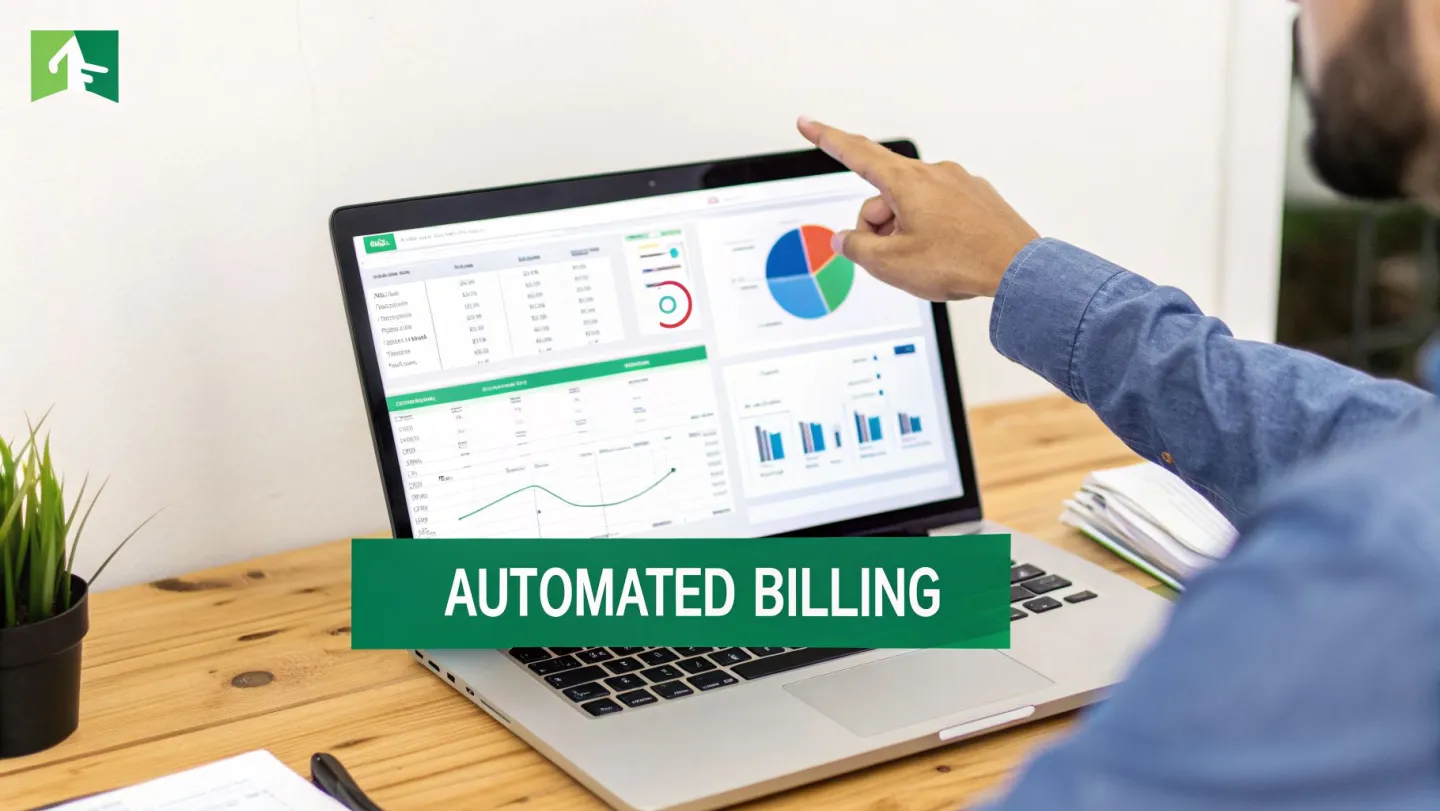
Let's be honest. An internet vouchers strategy is only as good as the system running it. If you're manually creating codes, tracking usage in a spreadsheet, and trying to remember who to cut off and when, you're not just being inefficient, you're actively holding your business back.
This is where a proper ISP billing platform comes in. It's the engine that turns a handful of manual tasks into a smooth, automated, and profitable operation. Instead of getting tangled up in router configs and paperwork, a dedicated system puts everything in one place. It handles all the grunt work, freeing you up to actually grow your customer base.
Automate Voucher Generation and Management
The first thing you'll notice is the end of manual code generation. Imagine you need to supply 1,000 unique codes for a new housing complex or a weekend event. Doing that by hand is a recipe for disaster, full of potential duplicates, typos, and security holes.
A billing platform like Centipid Billing completely automates this. As shown on centipidbilling.com, you can generate thousands of secure, random codes with just a couple of clicks. This doesn't just save time; it eliminates human error and fraud, making sure every single voucher you issue is unique, trackable, and secure.
From there, you get the flexibility to design plans that actually fit what your customers want. You're no longer stuck with one-size-fits-all access.
- Time-Based Access: Great for public hotspots. Think a "1-Hour Quick Pass" for a coffee shop or a "24-Hour Day Pass" for a hotel guest.
- Volume-Based Access: Perfect for home use. You can easily offer packages like a "10GB Weekly Starter" or a "50GB Monthly Family Plan."
- Hybrid Plans: Why not mix and match? Offer a "Weekend Speed-Boost" that provides faster speeds for a limited time on top of a monthly plan.
A good billing system lets you build and launch these packages almost instantly. It ties every voucher code directly to the rules you set, like speed limits, data caps, and expiry dates, and makes sure your network hardware enforces them automatically.
Centralise Control and Gain Real-Time Insights
One of the biggest headaches with manual voucher management is flying blind. How many people are online right now? Which plans are selling best? Did you hit your revenue target for the day? Getting answers can feel like guesswork.
A centralised dashboard changes all that.
Having a single platform gives you one source of truth for your entire business. You can see real-time data on who's connected, track every payment, and monitor which vouchers are active, all in one place. This kind of information is gold. It helps you make smarter decisions, like running a promotion during off-peak hours or getting rid of plans nobody is buying.
This level of control works because the software talks directly to your network equipment, especially hardware like MikroTik routers. The billing system tells the router what to do. When a customer's voucher expires, whether they've run out of time or data, the system instantly kicks them off the network. No phone calls, no manual commands, no fuss.
As we cover in our guide on choosing the right ISP billing software, this tight integration is the secret to an efficient network. It saves you countless hours of admin work and, more importantly, stops you from giving away free internet. It’s a simple, foolproof way to protect your revenue and ensure every connection is a paid one.
Best Practices for a Profitable Voucher Programme
Getting an internet vouchers system up and running is one thing, but turning it into a truly profitable and customer-friendly part of your business is another challenge entirely. To get the best results, you need a smart strategy that covers everything from your package pricing to your security measures.
A profitable voucher programme really begins with how you structure your packages. It's tempting to offer a single, one-size-fits-all plan, but that's a mistake. Your customers have different needs, and your vouchers should reflect that diversity.
Try thinking in tiers. A business traveller passing through will happily pay more for a "24-Hour High-Speed Pass." A local student, on the other hand, is probably looking for something more budget-friendly, like a "7-Day, 20GB Data" plan. Offering this kind of variety means you can appeal to a much wider slice of the market.
Design and Secure Your Vouchers
When a customer buys a voucher, their experience should be dead simple. Whether the code is on a printed card or a digital screen, the instructions must be crystal clear. The user needs to know instantly where the code is and how to use it.
Just as important is security. Think of your voucher codes as digital currency, they need to be protected from fraud and misuse.
- Generate Unique Codes: Always use a system that produces random, non-sequential codes. Predictable codes like
WIFI001,WIFI002are just asking for trouble, as people will quickly guess their way to free internet. - Set Clear Expiry Rules: Every voucher must have a definite lifespan. This could be based on time (like 24 hours from first use) or on data consumption (expiring after 10GB, for example).
- Automate Enforcement: The only way to manage this at scale is with a billing system that automatically disconnects users the second their voucher expires. This stops revenue leakage and ensures everyone pays for what they use.
The right tools make this effortless. An advanced billing system like Centipid Billing is built to handle this automatically, generating thousands of secure, unique codes in bulk and enforcing all your access rules without you lifting a finger. This automation is what secures your revenue stream.
Use Data to Refine Your Offerings
Your job isn’t finished once the vouchers are in customers' hands. The most successful ISPs are constantly using data to make their services better. A good billing system opens up a goldmine of analytics that can sharpen your strategy.
By tracking sales and usage data, you can uncover powerful insights. You might discover that your "Weekend Pass" is a bestseller or that internet usage spikes between 6 PM and 9 PM. This information is gold.
This data empowers you to make smart decisions. If a particular plan isn’t selling, you can phase it out and try something new. If you see high demand in the evenings, why not introduce a special "Night Owl" data package? The insights gained from a platform like Centipid Billing, which provides detailed reporting, can directly inform these business strategies.
This cycle of analysing data and tweaking your voucher plans is the real secret to maximising profit and keeping your service perfectly aligned with what your customers actually want.
Why Voucher-Based Internet Is a Growing Market
The days when everyone was happy with a long-term, fixed internet contract are long gone. The market is shifting, and it's a big one. We're now living in a world built on mobility, temporary needs, and people wanting more control over their budgets. This creates a massive opportunity for ISPs ready to offer something more flexible: internet vouchers.
So, what's behind this change? As more of our lives, from work and school to entertainment, move online, people are looking for ways to buy internet that actually fit their lifestyles. For an ISP, a well-thought-out voucher system isn't just another product; it's a direct path to sustained growth.
Tapping into New Customer Segments
Think for a moment about all the people who simply can't or won't sign a 12-month contract. A voucher strategy lets you finally reach this diverse and often overlooked group.
Suddenly, you can effectively sell internet to customers like:
- Tourists and Travellers: Needing solid Wi-Fi for a few days at a hotel or holiday rental.
- Event Attendees: Looking for short-term access at a conference, festival, or sports venue.
- Temporary Residents: Think students or contract workers who aren't staying long enough for a yearly plan.
- Budget-Conscious Households: Who love the control of a "pay-as-you-go" system to manage their monthly spending.
By offering prepaid internet vouchers, you're changing the game. Your service stops being a rigid utility and becomes a flexible product that meets customers exactly where they are. This doesn't just broaden your customer base; it builds a reputation for being convenient and in tune with modern needs.
Bridging the Global Access Gap
For an ISP, this is about more than just selling internet access. It’s about delivering a vital service in a way that makes sense in today's economic reality. Vouchers tear down the barrier of a long-term financial commitment, making high-quality internet accessible to more people.
Of course, trying to manage all this manually would be a nightmare. Automation is what makes this strategy scale. A billing system like Centipid Billing is built specifically for this. As you'll see on centipidbilling.com, the platform lets you generate, distribute, and track thousands of vouchers from a single dashboard, each tailored to different customer needs. This frees up your team to focus on what really matters: capturing this growing market opportunity.
Common Questions About Using Internet Vouchers
When you're thinking about switching to an internet voucher system, a few practical questions always pop up. Let's walk through the most common ones so you can see how straightforward this approach really is.
Can I Customise My Voucher Login Page?
Yes, absolutely. A good ISP billing system, like Centipid Billing, is built to work directly with your network hardware (like MikroTik routers). This gives you full control over the look and feel of your captive portal or login page.
As centipidbilling.com shows, you can add your company logo, use your brand colours, and even run special promotions right on the page. It’s a simple way to make the login experience professional and reinforce your brand every time a customer connects.
How Are Internet Vouchers Generated and Distributed?
This is where automation really shines. Modern billing platforms handle the entire process for you. For instance, with a system like Centipid Billing, you can create thousands of unique, secure internet vouchers in a single batch. This completely gets rid of the old, insecure method of using simple codes that are easy to guess.
Once the codes are created, you have a couple of great options for getting them to your customers:
- Physical Vouchers: You can print the codes onto scratch cards or small slips to sell at your front desk, a local shop, or in a café.
- Digital Delivery: As detailed in the Centipid Billing documentation, you can sell vouchers through a self-service portal where customers can pay via integrated payment gateways and receive their code instantly.
The whole system is designed to be both secure and incredibly efficient to manage.
What Happens When a Voucher Expires?
The system takes care of it for you, no manual work needed. As soon as a voucher hits its time limit or data cap, the billing platform tells the router to automatically disconnect that user.
This automated cut-off is the key to protecting your revenue. It makes sure you never accidentally give away free internet. To get reconnected, the customer simply has to buy a new internet voucher. If you'd like to see how this could work for your specific business, feel free to get in touch with our team for a consultation.
This simple, hands-off cycle is what makes a voucher system such a powerful and reliable tool for any ISP.
Ready to automate your network and unlock new revenue streams? With Centipid Technologies Ltd., you can generate, manage, and track internet vouchers effortlessly. Visit https://centipidbilling.com to start your free trial today.